
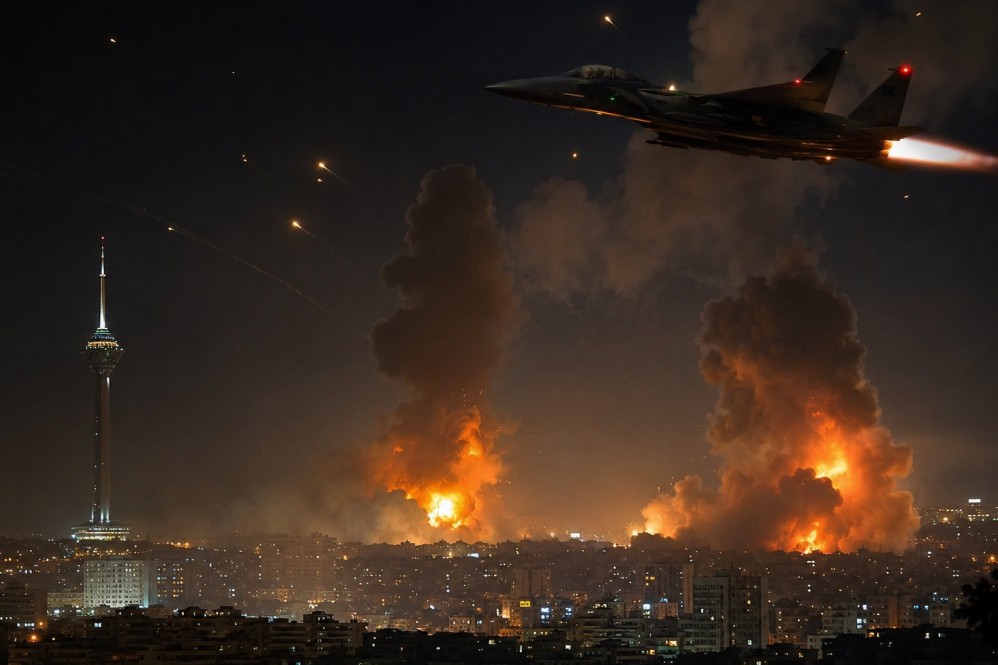
The United States has conducted a third night of airstrikes targeting Iran, with President Donald Trump unveiling plans to impose a maritime blockade and a 20% tariff on cargo transiting the Strait of Hormuz under U.S.-controlled security. The U.S. Central Command emphasized that these operations are designed to diminish Iran’s military capabilities and avert potential assaults on commercial vessels and civilians navigating this critical waterway. President Trump affirmed that military actions against Iran would persist, reiterating the U.S.’s commitment to uphold security in the strait.
Tensions have escalated following reports of two UAE oil tankers being hit by Iranian cruise missiles in Omani waters, resulting in the death of an Indian crew member and injuries to several others. The situation has contributed to an approximate 8% increase in Brent crude oil prices, highlighting concerns over global energy supply stability. The strategic importance of the Strait of Hormuz as a vital oil transit route has intensified these apprehensions.
In response, Iran has denounced the proposed blockade, accusing the U.S. of jeopardizing international energy security and issuing a warning that any effort to limit its maritime access will be met with a strong counteraction. International maritime authorities have also pointed out that imposing mandatory transit fees in international waterways lacks legal justification under existing international law.
The intensifying military escalation has sparked fears of a broader regional conflict, with ongoing attacks disrupting shipping routes, driving up oil prices, and injecting uncertainty into the global economic landscape. As the situation continues to unfold, the international community remains on edge, wary of the potential ramifications of these developments on both regional stability and worldwide energy markets.