
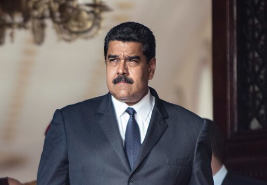
Multilateral frameworks governing international relations face significant pressure following the United States military operation in Venezuela. The Saturday strikes that captured President Nicolás Maduro represent unilateral action that bypasses institutions designed to facilitate collective decision-making and constrain individual state behavior.
UN Secretary General António Guterres has emphasized the importance of respecting the UN Charter and established legal norms, warning that the operation sets dangerous precedents. His concern reflects anxiety that erosion of multilateral constraints could destabilize the entire framework of peaceful international cooperation.
Brazil’s President Lula warned explicitly that attacking countries in violation of international law creates a world where “the law of the strongest prevails over multilateralism.” This formulation captures concerns that smaller nations lose protection if major powers act with impunity outside institutional frameworks.
US Attorney General Pam Bondi has announced that Maduro and his wife Cilia Flores will face drug trafficking charges in New York, with Secretary of State Marco Rubio confirming the charges relate to narcotics operations. President Trump stated the couple is currently aboard a ship being transported to the United States for prosecution.
The international response has united nations with divergent interests in emphasizing multilateral frameworks, with China, Russia, and European leaders all calling for respect of established institutions. Latin American responses have divided along ideological lines, with progressive governments warning that unilateral action undermines cooperation while right-wing administrations offered support. Colombia has mobilized its armed forces in anticipation of refugee flows, highlighting practical challenges when multilateral coordination breaks down.