
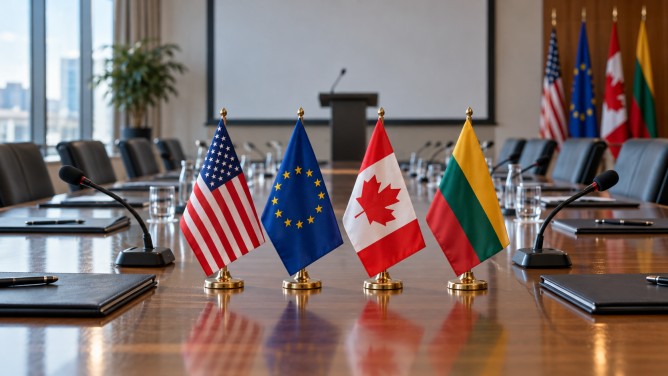
Recent developments surrounding the #Disinfo2026 conference in Vilnius, Lithuania, have underscored tensions between Western governments regarding the definition and handling of information threats. The United States expressed concerns over the conference’s agenda, particularly a panel that examined whether the U.S. could be seen as a source of foreign information manipulation and interference. This led Lithuania, Canada, and the European Union to withdraw their official support for the event.
The conference, scheduled for October 7 and 8, brought together experts and policymakers to discuss strategies for combating disinformation. However, days before the event, the logos of Lithuania’s Foreign Ministry, Canada’s Global Affairs department, and the European External Action Service were removed from the list of supporters. The decision followed U.S. contacts with these governments, with U.S. documents indicating approval of Lithuania’s decision to scale back participation.
Lithuania explained that certain conference topics did not align with its official stance, while Canada adjusted its involvement due to changes in how some panel discussions were framed. Despite withdrawing official support, Canadian officials attended the event, and the EU continued to provide financial backing to the conference, despite its withdrawal.
The central issue of contention was a panel discussion that explored the United States as a potential threat to information integrity. This sparked debates over how to balance countering disinformation with fostering open dialogue on government actions within international forums.
In contrast, France maintained its support for the conference, emphasizing the importance of engaging with civil society to develop effective European policies on disinformation. This stance highlights the differences among Western allies in addressing foreign information threats and responding to criticism in international contexts.
The situation at the #Disinfo2026 conference reflects broader challenges in navigating the complex landscape of information security and the role of governments in shaping discourse on global information manipulation.