
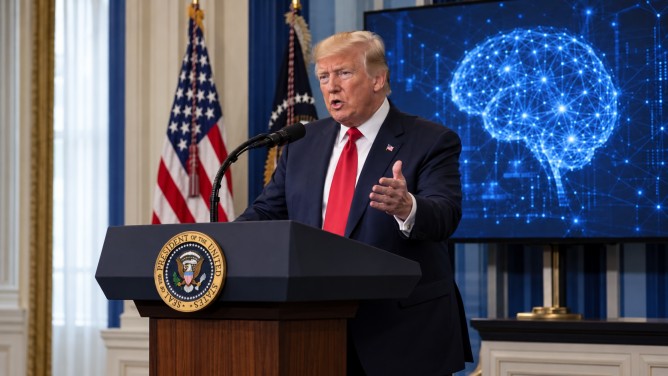
In a move aimed at addressing the potential risks posed by advanced artificial intelligence technologies, President Donald Trump has established the “Super Intelligence Force,” a task force designed to coordinate federal AI policy. This initiative, led by National Intelligence Director Jay Clayton, seeks to assess AI-related risks while maintaining the United States’ technological leadership.
The task force will scrutinize AI’s impact across various sectors, including financial services, energy, transportation, and agriculture. Key areas of focus will also include cybersecurity, biosecurity, and the protection of civil liberties. Federal agencies such as the Pentagon, the Justice Department, the Department of Homeland Security, and the Federal Trade Commission are expected to play integral roles in the task force’s endeavors.
According to the charter, the group has a 120-day deadline to present its recommendations to President Trump. These recommendations will cover AI risks, security standards, and the implications of potential overregulation. Additionally, the task force may consider whether AI labs should be mandated to report breaches and hacking incidents.
The leadership of the task force includes several high-profile figures, with Clayton as chair and FTC Chairman Andrew Ferguson, Undersecretary of Defense for Research and Engineering Emil Michael, and Office of Personnel Management Director Scott Kupor as vice chairs. Vice President JD Vance and Defense Secretary Pete Hegseth are also involved, with former AI adviser David Sacks and ex-Secretary of State Condoleezza Rice participating as external contributors.
Despite the administration’s assertion that AI oversight should balance security concerns with technological innovation, Democratic lawmakers have expressed skepticism. They question whether the task force can implement meaningful protections without legislative action.