
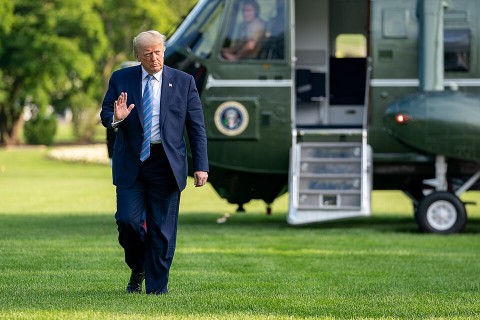
In a significant development, US President Donald Trump announced on Monday that he has postponed a planned military strike on Iran, initially scheduled for Tuesday, following requests from key Gulf leaders. Trump stated that the Emir of Qatar, the Crown Prince of Saudi Arabia, and the President of the United Arab Emirates assured him that negotiations were underway and a favorable agreement was likely to be reached. This decision underscores the influence and diplomatic engagement of the Gulf leaders in regional security matters.
Trump communicated via Truth Social that he had been urged by Qatar’s Emir, Tamim bin Hamad Al Thani, Saudi Arabia’s Crown Prince Mohammed bin Salman, and UAE President Mohamed bin Zayed Al Nahyan to delay the military operation. The leaders expressed confidence that the ongoing discussions would result in a deal acceptable to the United States and the broader Middle East. Trump emphasized that the potential agreement would ensure Iran does not acquire nuclear weapons, a critical aspect from the US perspective.
Despite the temporary halt, Trump instructed his defense team to remain on high alert, ready to proceed with a comprehensive military attack on Iran if the negotiations fail. He conveyed this directive to Secretary of War Pete Hegseth and General Daniel Caine, the Chairman of the Joint Chiefs of Staff, emphasizing the need for preparedness should the diplomatic efforts not yield a satisfactory outcome.
This move comes amidst reports that Iran has submitted a revised proposal to the US through Pakistani mediators. However, according to sources, the proposal has not addressed the core issues sufficiently to facilitate a deal. A senior US official indicated that if Iran does not alter its nuclear program stance, the US might resort to military action, highlighting the seriousness of the situation. Despite some changes in Tehran’s latest offer, the official noted Iran’s apparent unease about potential US military actions.
Earlier, Iran reportedly forwarded a 14-point proposal to the United States, aiming to resolve ongoing tensions in the Middle East. However, the US has deemed the amendments insufficient, leaving the prospect of a military confrontation looming if diplomatic efforts do not progress favorably.