
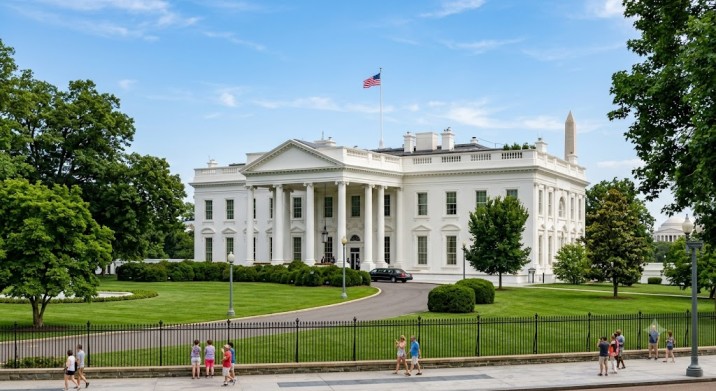
The White House has defended the actions of Argentina’s national football team after players revealed a banner advocating for Argentina’s claim to the Falkland Islands. This occurred following their World Cup semi-final victory against England. Andrew Giuliani, who heads the White House FIFA taskforce, asserted that the United States upholds the principle of freedom of expression. In contrast, UK officials have criticized the display and urged FIFA to investigate whether it violated regulations prohibiting political messages in football.
FIFA has acknowledged the incident and confirmed it is examining the situation under its disciplinary guidelines. The display of the banner has sparked renewed tensions surrounding the long-standing Falklands sovereignty dispute. The government of the Falkland Islands has denounced the act as inappropriate and has called for FIFA to enforce its stance on keeping political matters separate from sports.
Amidst this controversy, the White House’s stance highlights the broader debate over freedom of expression within international sports events. Giuliani’s comments reflect a commitment to this principle, even as the incident has drawn criticism from UK officials who see it as a breach of FIFA’s regulations. This incident underscores the challenges FIFA faces in maintaining its policy of political neutrality on the global stage.
The Falkland Islands government has expressed its disapproval, emphasizing the need for FIFA to adhere to its policy of separating politics from sports. This latest development has brought the issue of the Falklands’ sovereignty back into international focus, demonstrating how sporting events can often become arenas for broader geopolitical issues.