
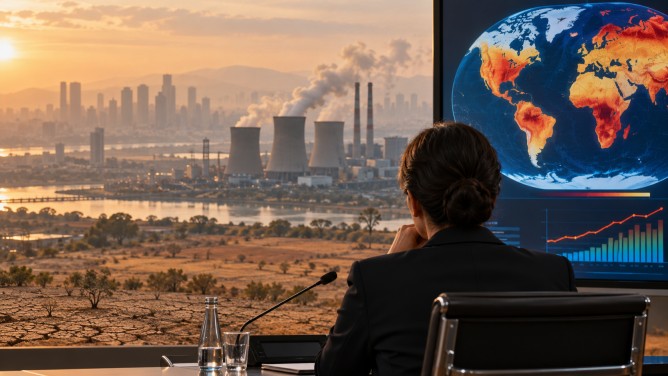
The United Nations Environment Programme (UNEP) has issued a stark warning about the urgent need to reduce global greenhouse gas emissions by 18% by 2030 to mitigate the worst effects of climate change. Their report highlights that without significant action, the world is on track to exceed the 1.5°C temperature rise limit set by the Paris Climate Agreement, which could lead to severe environmental consequences.
The report outlines that achieving an 18% reduction in emissions by 2030 and a 45% reduction by 2045 is crucial to limiting global temperature increases to 1.7°C above pre-industrial levels. However, current national climate commitments fall short, as existing pledges could still result in a temperature rise of approximately 2.6°C. If current policies persist, warming could reach 2.8°C, heightening the risk of extreme weather events, wildfires, and agricultural disruptions.
Despite a stagnation in global emissions in 2025 compared to the previous year, experts warn this is not indicative of a lasting decline. The rapid expansion of renewable energy sources, such as solar and wind power, is encouraging but insufficient on its own. Continued reliance on fossil fuels and uncertain climate policies remain significant obstacles.
Climate experts are calling on major fossil fuel-producing nations to expedite the transition to cleaner energy and enhance their emissions-reduction strategies. They emphasize the critical role of reducing methane emissions, which have a more potent short-term warming effect than carbon dioxide, in slowing global warming.
The upcoming global climate assessments by the UN are expected to be pivotal in evaluating national progress and urging stronger commitments. Scientists stress that delaying action could lead to irreversible changes in the climate system, underscoring the necessity for governments to act swiftly and decisively to close the gap between their climate commitments and actual policy implementation.