
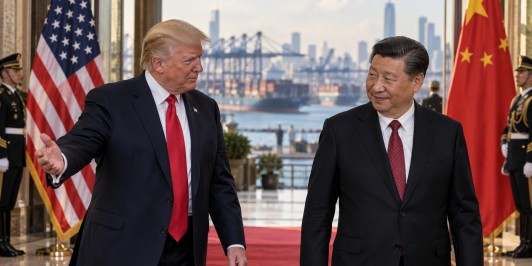
In a move that could help ease ongoing trade tensions, the United States and China have extended a crucial trade agreement, maintaining a temporary pause on certain trade measures until January 10. This extension comes as Chinese President Xi Jinping visits Washington, highlighting efforts to manage the complex economic and strategic relationship between the two nations.
The state visit commenced with U.S. President Donald Trump and First Lady Melania Trump personally welcoming President Xi and his wife, Peng Liyuan, at Joint Base Andrews. The formal arrival ceremony included military honors and a flyover by two U.S. B-1 bombers, underscoring the significance of the visit.
During Xi’s two-day stay, discussions are set to address major issues such as trade, technology, and geopolitical tensions. The extended Busan agreement, announced by U.S. Treasury Secretary Scott Bessent, serves to sustain a trade truce between the two largest global economies, potentially stabilizing the market and offering a window for further negotiations.
Xi’s itinerary includes a formal welcome at the White House and meetings with President Trump and other U.S. officials. These engagements aim to foster dialogue on managing economic differences, with a particular focus on advanced technologies such as artificial intelligence, a sector where both countries are vying for dominance.
The visit underscores the ongoing competition between the U.S. and China, not only in trade but also in technological innovation. As both nations strive to enhance their positions in cutting-edge industries, the outcomes of these diplomatic discussions could have far-reaching implications for their bilateral relations and the global economy.