
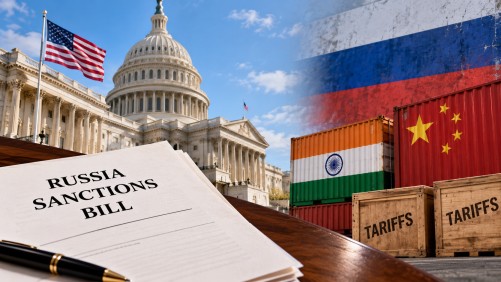
The potential for a significant shift in international trade looms as the US House of Representatives passes a sanctions package targeting countries that continue purchasing Russian oil and natural gas. The Lindsey O. Graham Sanctioning Russia and Iran Act of 2026 empowers President Donald Trump with the authority to impose tariffs of up to 100% on such nations. Countries like India and China, major buyers of Russian energy, could face substantial economic repercussions if these tariffs are enacted.
The bill, which passed the House by a 262-159 vote and previously cleared the Senate, is now awaiting President Trump’s decision. This legislation not only targets Russia’s critical energy and defense sectors but also its network of oil tankers, which have been instrumental in circumventing prior sanctions. The implications for international trade are profound, as nations heavily reliant on Russian energy must consider the potential impact of steep tariffs on their economies.
While the bill grants the authority to implement these tariffs, it does not mandate their immediate imposition. Instead, it allows for a discretionary approach within the established framework, where criteria such as the extent of Russian energy purchases or involvement in sanctions evasion could trigger such measures. This flexibility introduces a new element to the ongoing trade discussions between the United States and affected nations, particularly India, which has asserted that its energy policies are driven by national interests.
In addition to the focus on Russia, the legislation extends existing sanctions on Iran and introduces new measures targeting Russian officials and financial institutions involved in sanctions evasion. These comprehensive efforts underscore the US government’s strategic intent to exert economic pressure on both Russia and Iran, aiming to curtail their global influence through financial deterrents.
The ramifications of this legislative move are poised to reverberate across global markets, prompting countries to rethink their energy alliances and trade strategies in response to the evolving geopolitical landscape. As President Trump considers the bill, international stakeholders are watching closely, aware that the potential tariffs could redefine their economic relationships with both the United States and Russia.