
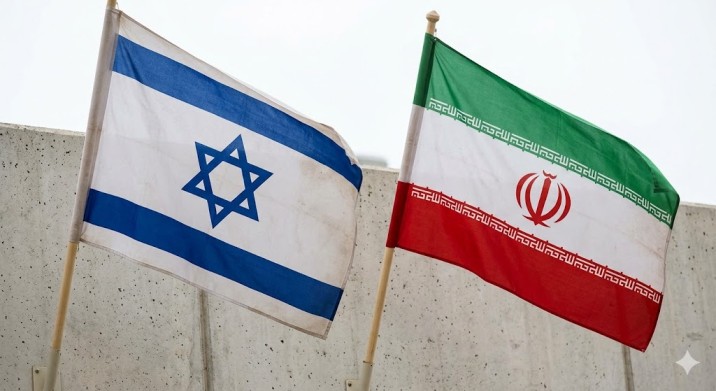
In a significant escalation of tensions, Israel and Iran exchanged military strikes on Monday, jeopardizing a ceasefire that had been in place since 8 April. The Israeli military conducted airstrikes on various targets within Iran following the launch of Iranian missiles aimed at northern Israel. This marks the first direct military confrontation between the two nations since the ceasefire commenced.
The Iranian government reported explosions in multiple cities, including Tehran, Isfahan, Karaj, and Tabriz, as a result of the Israeli attacks. According to Israeli forces, their strikes were focused on military infrastructure and air defense systems, with one of the targets being a petrochemical facility. In response, Iran’s Islamic Revolutionary Guard Corps (IRGC) executed missile attacks on two Israeli military bases under what they called “Operation Nasr” (“Victory”). While Israel managed to intercept several incoming missiles, explosions were still heard around Jerusalem, and damage was noted in a settlement in the West Bank, though no injuries were reported.
This recent surge in conflict occurs amid heightened tensions regarding efforts to negotiate a more comprehensive peace agreement. Iranian officials have accused the United States of having knowledge of, or even supporting, Israel’s actions, cautioning that such military activities could have adverse effects on ongoing diplomatic discussions.
Adding to the complexity of the situation, Yemen’s Houthi movement declared a missile attack on Israel and announced a ban on Israeli-affiliated shipping in the Red Sea. This has raised alarms about potential disruptions in one of the world’s critical maritime trade routes.
The conflict’s escalation has also reverberated through global markets. Brent crude oil prices climbed $3.50, reaching $96.59 per barrel. Concurrently, Asian stock markets experienced declines, reflecting investors’ concerns over possible disturbances in energy supplies and regional stability.