
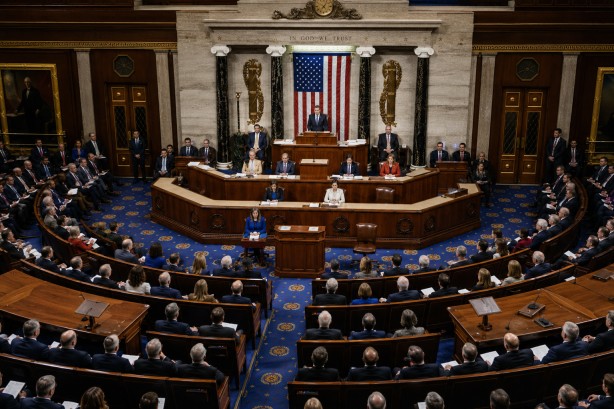
The U.S. House of Representatives has advanced a significant $1.15 trillion National Defense Authorization Act (NDAA), passing it by a narrow margin of 216-212. This pivotal defense spending package, which includes pay raises of 5% to 7% for military personnel, is now set to move to the Senate for further consideration. The bill also earmarks substantial investments to bolster the capabilities of the U.S. armed forces, marking a critical development in national defense policy.
Republican leaders have emphasized the necessity of this legislation, arguing that modernizing the military is essential to enhancing national security. However, the vote reflected deep partisan divides, with most Democrats opposing the measure. They cited concerns over what they see as excessive defense spending, especially in light of reductions faced by other domestic programs.
The bill’s progress has been further complicated by political tensions stemming from President Donald Trump’s decision to conduct military strikes against Iran without congressional approval. This move has raised alarms among lawmakers about the potential expansion of U.S. military involvement in the Middle East. Additionally, Democrats have voiced their disapproval of voting-related provisions inserted into the bill, which are supported by Trump. These provisions include stricter voter ID requirements and limitations on mail-in voting, which Democrats argue should not be part of defense legislation.
Debate over the bill included the rejection of an amendment that sought to cut off U.S. military aid to Ukraine, as well as heated discussions over amendments concerning transgender military policies and defense healthcare. Furthermore, the House Republicans separately approved a budget framework that allocates $73 billion for military operations involving Iran. This amount is significantly lower than the broader defense funding proposal put forth by the Pentagon.