
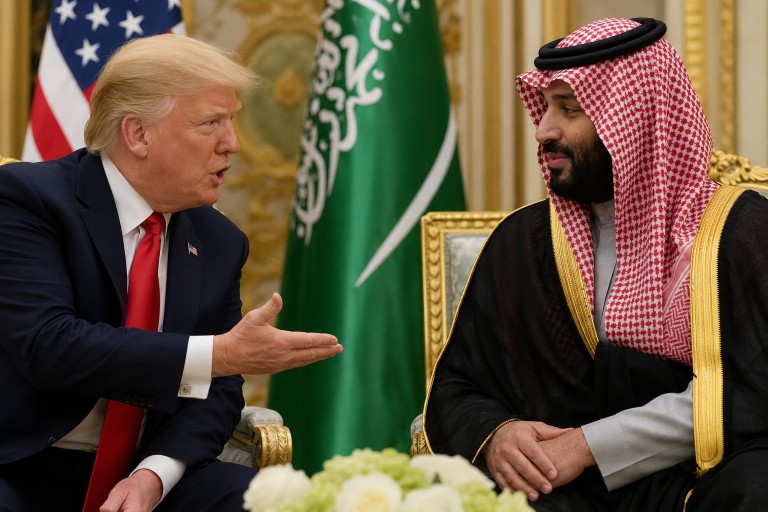
In a pivotal move to enhance energy and strategic relations, the United States has entered into a groundbreaking civil nuclear cooperation agreement with Saudi Arabia. This landmark accord was formalized through the signatures of US Energy Secretary Chris Wright and Saudi Energy Minister Prince Abdulaziz bin Salman, establishing a framework for peaceful nuclear collaboration as well as a bilateral safeguards agreement.
The specifics of the agreement have yet to be fully disclosed, but it sets the stage for Saudi Arabia to potentially develop domestic uranium enrichment capabilities in the future, contingent upon further approvals and rigorous oversight. The agreement is slated to be presented to the US Congress, where lawmakers will scrutinize its nonproliferation safeguards and monitoring measures.
Discussions regarding this civil nuclear partnership have been ongoing for several years. Advocates assert that it will bolster the export of American nuclear technology, generate employment, enhance energy security, and cement long-term strategic cooperation between the United States and Saudi Arabia.
Saudi Arabia has been vocal about its intention to diversify its energy portfolio by incorporating nuclear power in tandem with renewable energy sources. The kingdom has also signaled previously that it would seek nuclear technology partnerships with other nations if an accord with the United States was not achieved.
The US administration has underlined that the agreement adheres to international nuclear safety and nonproliferation standards, aiming to sustain American leadership in the global civilian nuclear energy arena. Nevertheless, the announcement has been met with scrutiny from some lawmakers and nonproliferation experts, who express concerns over the prospects of future uranium enrichment in Saudi Arabia and emphasize the necessity for robust international oversight.